
Our breeding program is located in one of the coldest locations in the world where fruit is being bred. We may be the coldest location where some crops, like sour cherries, are being bred. We maintain a collection of over 20 fruit crops most of which we are breeding to some extent. In recent years we have emphasized breeding of Haskap, Sour cherries, Hazelnuts, and Apples. We have smaller breeding projects involving pears, grapes, plums, sandcherries, cherry plums, saskatoons and strawberries. We have also been breeding coleus, ornamental Prunus, and weeping crabapples. The last few years we have been gathering germplasm of rhubarb, hydrangea and hops and are considering breeding them. We also have collections of other fruit that we are not currently breeding: chokecherries, sea buckthorn, black currants, and raspberries.
Located on campus, our breeding program occupies about 50 acres. Previous to Covid-19 we held several educational events workshops throughout the year. We plan to make online versions of some of these in the near future.
When people buy our varieties from licenced nurseries, the royalties go back to our fruit breeding program. 65% goes directly to the program while 35% goes into an equipment fund that benefits horticulture research at our University. Over the years we have received strong support from Saskatchewan Agriculture's Agriculture Development Fund.
2024 plant sale
We are going to be having our in person sales and pick up June 7-8. We are still working on if we will be able to have an online sale but if so that would open a week earlier. Check back here for more info later or our Facebook page University of Saskatchewan Fruit Program
Some of what we will have will be hardy grapes, saskatoons, haskap, strawberries, raspberries and apple trees.
Budding & Grafting Workshop
IMPORTANT UPDATE ON THE WORKSHOPS: Both of our workshops are now full! We will no longer be accepting registrants.
It is also important to note that we only accept cash or cheque, so please bring that with you on the day of the workshop. Also if individuals have their own grafting knives then please bring them along or else we will have some that people can borrow for the workshop. We may also have some new ones available for sale so bring extra cash if you would like to buy one of those ($20 each).
We will be holding two budding/grafting workshops at our Horticulture Field Lab (2909 14th Street East) on Friday, August 18th and Monday, August 21st starting at 12:30 pm. Registration is $40. Grafting is difficult to learn from books but so easy to learn in person! We will be demonstrating budding and grafting techniques that are best for beginners. There will also be a lecture about timelines and preparing budwood. Participants will practice grafting techniques under supervision. There will be apple trees available for purchase ($65/tree) if you would like to try grafting a combination apple tree to take home with you but supply is limited. Please email either lisa.taylor@usask.ca or justin.schaeffer@usask.ca to sign up. We look forward to seeing you there! Note: we only give grafting workshops every 2 or 3 years, so sign up soon or wait quite a while.
News
Passing of Dr. Maxine M. Thompson
We were very saddened to hear of the passing of our dear friend Dr. Maxine M. Thompson. She contributed greatly to our program. From her vast knowledge that she readily shared, to sharing of haskap genetics she was a great asset to us, but more importantly she was a friend. She will be missed greatly. The following was written by Dr. Kim Hummer, head of the USDA genebank in Oregon. Most of Maxine’s breeding work was carried out on the genebank’s land. Kim was an associate of Maxine for several decades.Emeritus Professor Dr. Maxine M. Thompson, Horticulturist, Plant Explorer (1926 – 2021)
Dr. Bors Russia trip
Video of Dr. Bors' trip to RussiaHistory of the Usask sour cherry
https://www.goodfruit.com/tarts-with-a-touch-of-romance/Bob Bors and Rick Sawatzky, win prestigious Stevenson Award
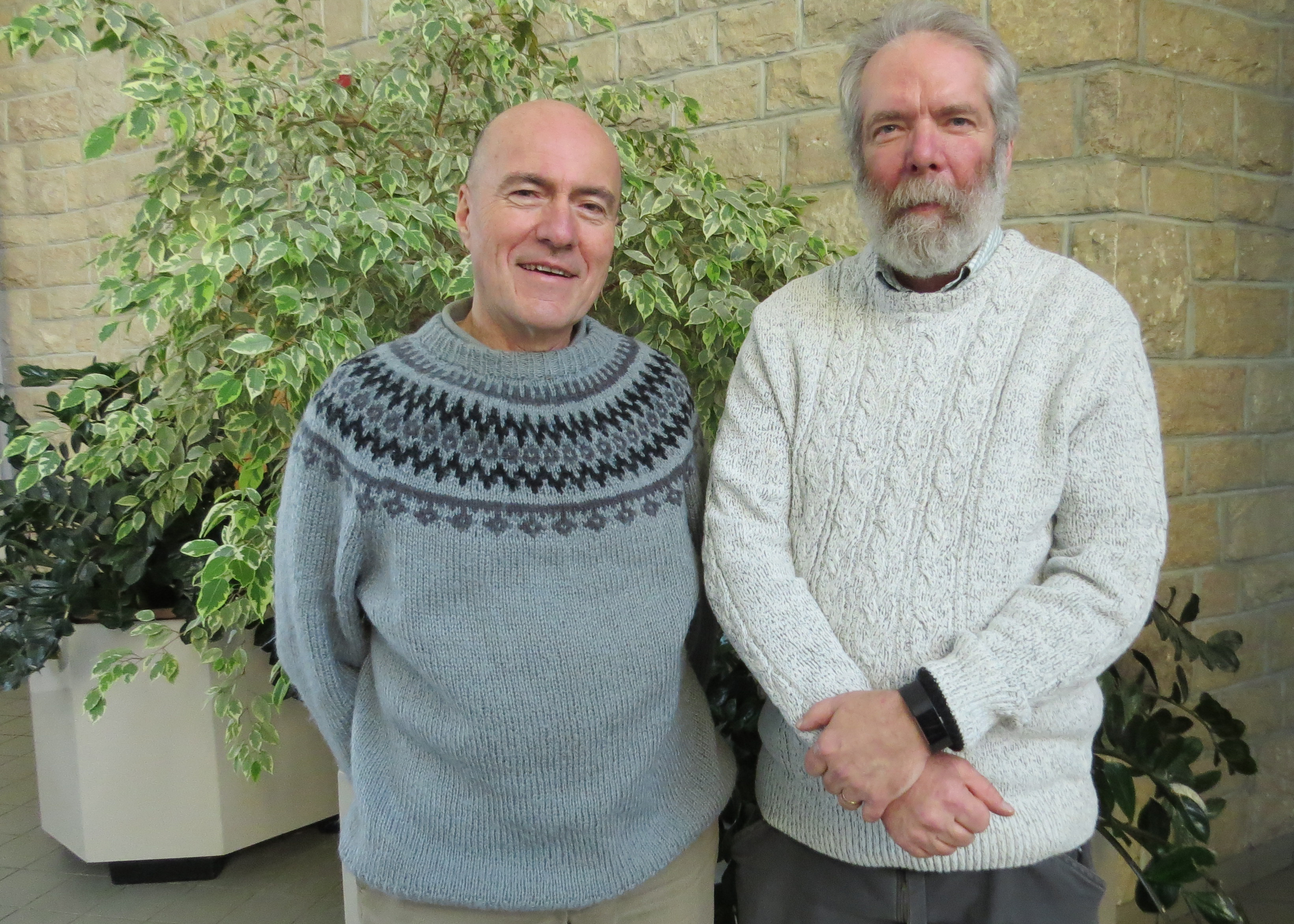 |
Bob Bors and Rick Sawatzky, win prestigious Stevenson Award for their development of sour cherries and haskaps |
Growing Fruit in Northern Gardens.......
 |
A description of this book is on our book page. It is available at the University of Saskatchewan bookstore, McNally Robinson Bookstore, and by contacting the authors. |